
If you’re wondering how to price 3D printed products correctly, this guide will walk you through real cost calculation, profit margins, and smart pricing strategies
This 3D printing pricing guide will help you calculate real costs, set a healthy profit margin, and build a sustainable 3D printing business.
Best 3D Models to Print and Sell in 2026
Table of Contents
Why Pricing Matters in a 3D Printing Business
Pricing is not just about covering filament costs. It determines:
- Your profit margin
- Your brand positioning
- Customer perception
- Long-term sustainability
If you underprice your products, you attract bargain hunters and burn out quickly. If you overprice without value justification, you lose sales.
Smart pricing balances competitiveness and profitability.
Understanding how to price 3D printed products properly can determine whether your business grows or struggles to survive
Step 1: Calculate Your Real Costs
Before setting a price, you must calculate your total production cost.
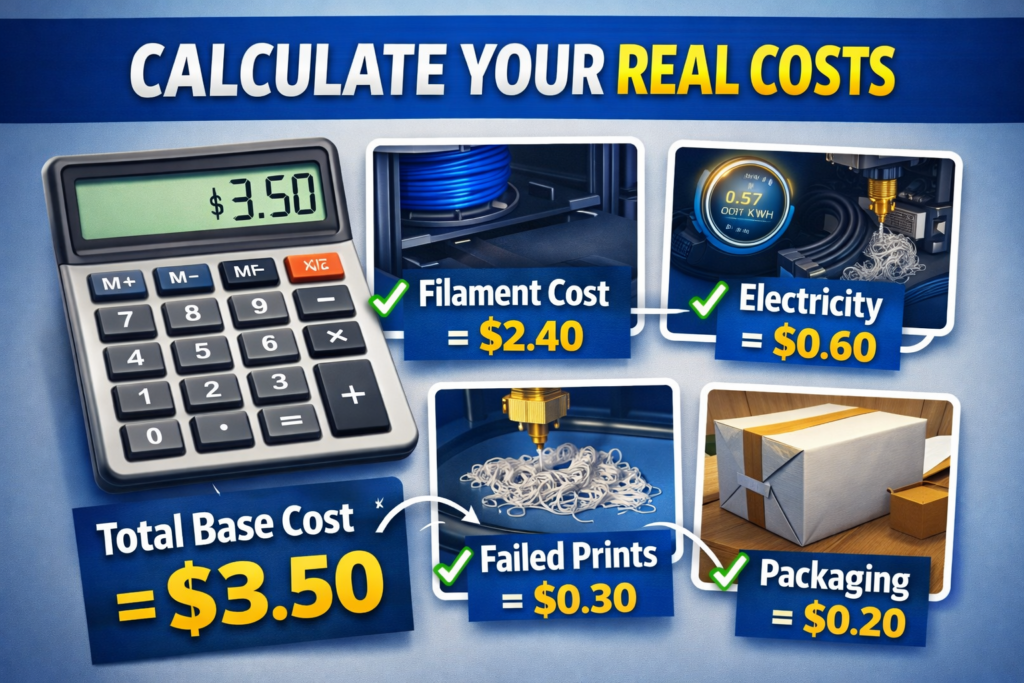
Include:
- Filament cost
- Electricity
- Printer wear and maintenance
- Failed prints
- Packaging
For example:
If a model uses 120g of PLA and your spool costs $20 per 1kg:
120g = $2.40 in filament.
Add electricity and overhead (estimate $0.50–$1).
Your base cost might be around $3.50 per item.
Never guess your costs. Calculate them.
Step 2: Add a Smart Profit Margin
After calculating costs, add a profit margin.
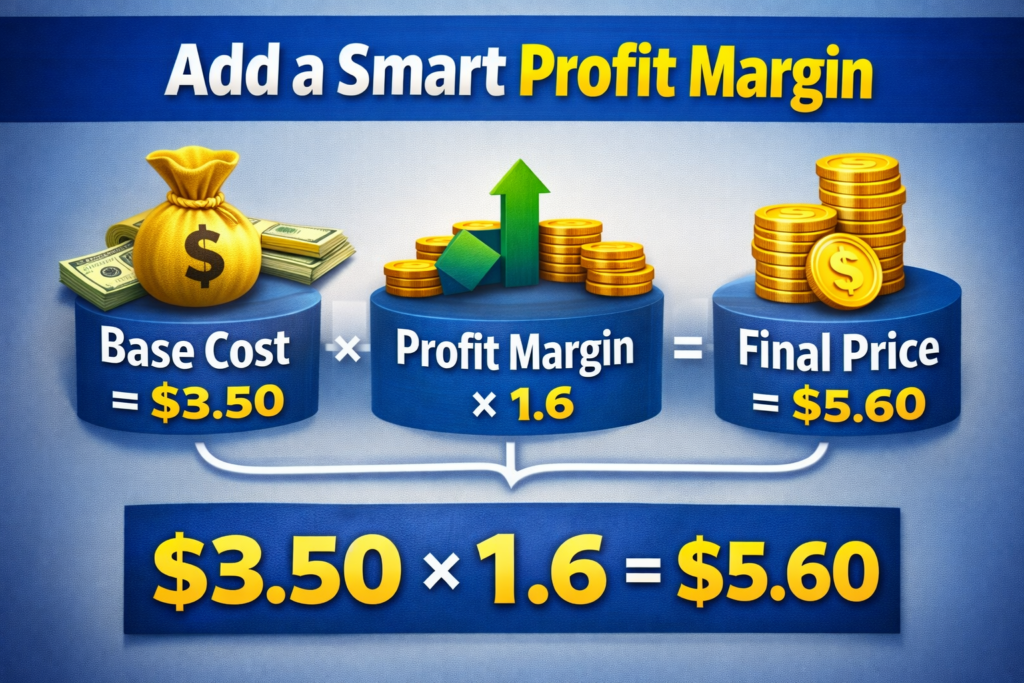
A common 3D printing profit margin ranges from:
- 40% to 70% depending on niche.
If your base cost is $3.50:
Selling price at 50% margin:
$3.50 × 1.5 = $5.25
You can round to $5.99 for psychological pricing.
This is how to price 3D printed products sustainably.
How to Start 3D Printing at Home
Step 3: Factor in Time and Complexity
Time is money.
If a print takes 10 hours:
- Printer time has value.
- Your setup time has value.
- Post-processing time has value.
Complex models, articulated designs, or detailed cosplay prints justify higher pricing.
For example:
A simple Easter egg may sell for $6.
A detailed articulated dragon could sell for $25–$40.
Price reflects complexity and perceived value.
Step 4: Research the Market
Before finalizing pricing:
- Check Etsy listings
- Check local marketplace prices
- Analyze similar STL sellers
But don’t blindly copy competitors.
If your quality is better, you can charge more.
Understanding market positioning is a key part of 3D printing business pricing
Most Popular 3D Printable Models in 2026
According to industry insights shared by All3DP, pricing strategy is one of the most overlooked aspects of small-scale 3D printing businesses.
Common Pricing Mistakes to Avoid
- Pricing based only on filament cost
- Ignoring failed prints
- Forgetting packaging expenses
- Undervaluing design complexity
- Competing only on low price
Low pricing attracts low-quality customers.
Focus on value.
A small business pricing guide
Example Pricing Breakdown
Let’s price a small articulated bunny:
- Filament cost: $2.20
- Electricity + overhead: $0.80
- Packaging: $0.50
- Total base cost: $3.50
Add 60% margin:
$3.50 × 1.6 = $5.60
Final selling price: $5.99 – $6.99
This ensures profit while staying competitive.
How to Adjust Pricing as You Grow
As your 3D printing business grows, your pricing strategy should evolve. In the beginning, you may accept slightly lower margins to build reviews and gain experience. However, once demand increases and your production workflow becomes more efficient, you can gradually raise prices.
Revisit your costs every few months. Filament prices, electricity rates, and packaging expenses can change over time. Updating your pricing ensures your profit margin remains healthy and sustainable.
Final Thoughts on Pricing 3D Printed Products
Learning how to price 3D printed products correctly is one of the most important skills in building a profitable 3D printing business.
Always:
- Calculate real costs
- Add healthy profit margins
- Adjust based on market research
- Price based on value, not fear
When done correctly, smart pricing allows you to scale your business without burnout.